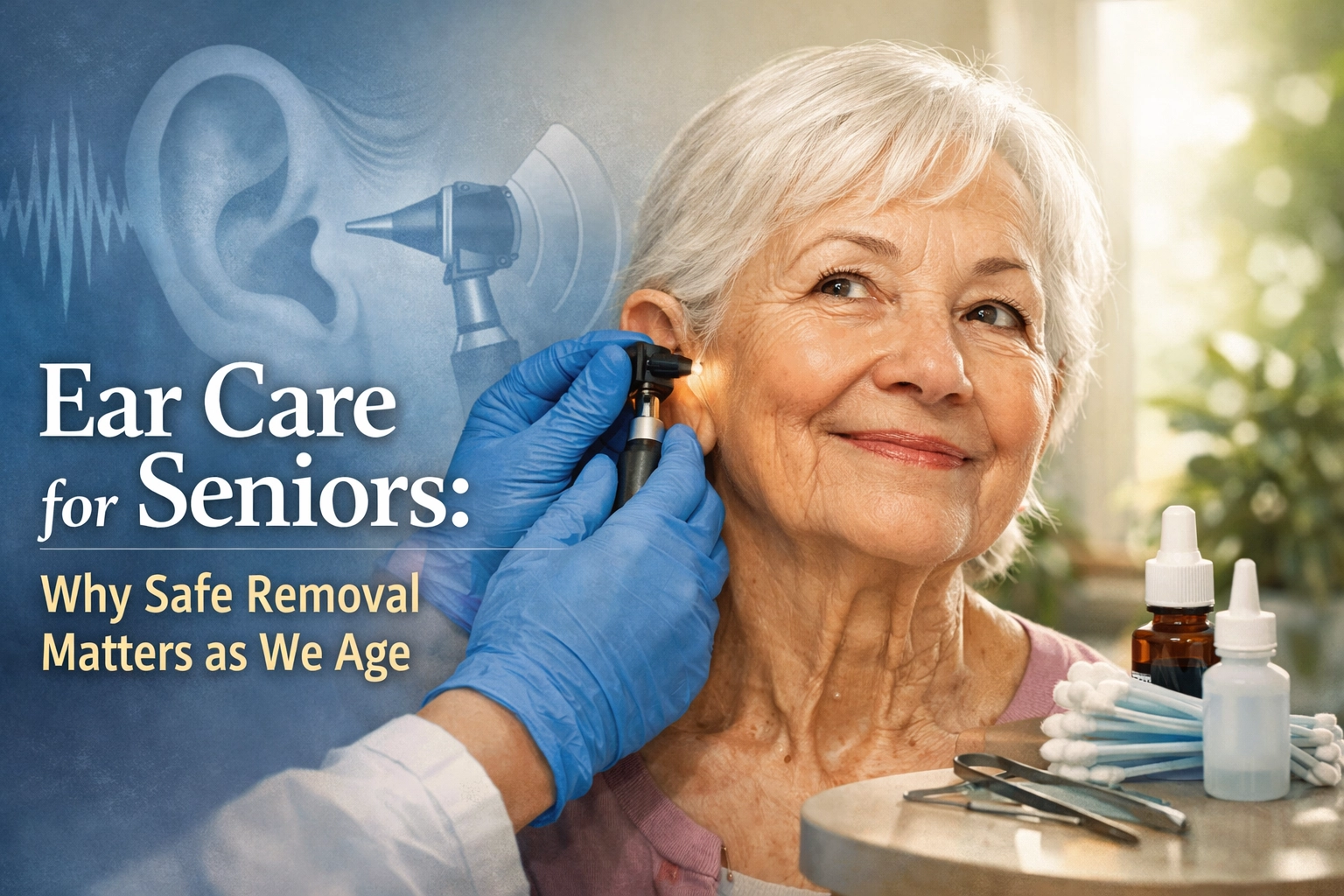
Have you ever found yourself nodding along in a conversation, catching only every third word, and thinking, "Well, I guess this is just what happens when you get older"? Or perhaps you’ve watched a loved one slowly withdraw from family dinners because the "hubbub" has become too much to handle?
Here’s a provocative question for you: What if it’s not actually "old age" at all?
What if the culprit behind that social isolation, the sudden bouts of dizziness, or the frustrating muffled sound isn’t an inevitable decline, but simply a stubborn plug of earwax that’s decided to set up permanent residency?
At Ear Suction Clinic, we see it every single day. We meet seniors who think they need expensive hearing aids, only to discover that after a 15-minute professional ear cleaning, the world suddenly sounds like it’s in high-definition again. But, and this is a big "but", how you get that wax out matters more as you age than at any other point in your life.
The Myth vs. The Reality of Aging Ears
There’s a common misconception that earwax (or cerumen, if we’re being fancy) stays the same throughout your life. Myth: Your ears just make more wax as you get older.
Reality: It’s not necessarily that you’re making more; it’s that the "self-cleaning" mechanism of your ear starts to slow down. As we age, the skin in the ear canal becomes thinner and less elastic. The wax itself tends to become drier and harder because the glands that produce it aren't as active as they used to be.
To make matters worse, for the gentlemen out there, increased hair growth in the ear canal acts like a literal fence, trapping that dry wax and preventing it from migrating out naturally. Before you know it, your ear canal is packed to the rafters with debris.

Why "Wait and See" is a Dangerous Game
I hear you ask, "Is a bit of wax really that big of a deal?"
Actually, it’s a whole different kettle of fish when it comes to seniors. Research shows that up to 30% of older adults suffer from impacted earwax, and that number shoots up to a staggering two-thirds for those in residential care. This isn't just about missing a few words in a joke; it’s a significant health risk.
- Cognitive Decline: There is a proven link between untreated hearing loss and the acceleration of cognitive decline. When the brain has to work overtime just to decode muffled sounds, it has less "processing power" for memory and thinking.
- The Risk of Falls: Your inner ear is the command centre for your balance. Impacted wax can cause pressure changes and vertigo. For a senior, a dizzy spell isn't just an inconvenience, it’s a potential hip fracture waiting to happen.
- Social Isolation: Humans are social creatures. When you can't hear, you stop engaging. You stop going to the club, you stop calling your grandkids, and you start feeling invisible.
We’ve seen patients' entire personalities change after a safe ear wax removal session. They go from quiet and withdrawn to chatting our ears off (pun intended!) before they’ve even left the chair.
The "Old School" Danger: Why Syringing is Out
You’re probably asking yourself, "Can’t I just use some drops and a bulb syringe at home?"
I’m going to be blunt here: Please, don't.
Back in the day, "ear syringing" (blasting the ear with a jet of warm water) was the standard. While some clinics still offer it, we believe it’s a risky move for seniors. Why? Because as I mentioned, the skin in an older ear canal is much thinner and more prone to damage. The pressure from traditional syringing can cause:
- Perforated eardrums (ouch!).
- External ear infections (otitis externa).
- Temporary vertigo that can lead to falls.
And don't even get me started on cotton buds. Using a Q-tip in a senior’s ear is like trying to clear a blocked pipe by shoving a rod down it: you’re just compacting the wax further against a very delicate eardrum.
Microsuction: The Gold Standard for Comfort and Safety
So, what’s the alternative? At Ear Suction Clinic, we swear by microsuction.
It’s exactly what it sounds like: we use a high-powered microscope to see exactly what we’re doing (no "blind" syringing here!) and a very gentle, medical-grade suction device to lift the wax out.
It’s essentially a tiny vacuum cleaner for your ears.
Why it’s perfect for seniors:
- No Water, No Mess: Unlike irrigation, there’s no liquid involved, which significantly reduces the risk of infection.
- Pinpoint Accuracy: Because we are looking through a microscope, we can see the difference between the wax and the delicate skin of the ear canal.
- Instant Relief: In most cases, the blockage is gone in minutes.
- Comfort: Most of our patients describe it as a "tickling" sensation or just a bit noisy, but it’s rarely painful.
If you want to dive deeper into why this tech is the way of the future, check out our page on microsuction ear wax removal.

Mobility Issues? We Come to You
I know what some of you are thinking: "Michael, this sounds great, but getting into a clinic is a mission and a half these days."
I totally get it. Whether it’s trouble driving, relying on busy family members for transport, or living in an aged care facility, sometimes the biggest barrier to healthcare is the commute.
That’s why we offer an ear wax removal home visit service. We bring the professional equipment: including the portable version of our suction tech: right to your living room or bedside. You get the same 5-star professional ear cleaning without having to navigate a parking lot or wait in a crowded lobby.
It’s about dignity and comfort. Everyone deserves to hear clearly, regardless of their mobility.
Maintenance: The 3-Month Rule for Hearing Aid Users
If you wear hearing aids, you’re in a special category. Hearing aids actually encourage wax buildup because they block the natural exit of the ear canal. Furthermore, that wax can seep into your expensive hearing aid, causing it to whistle or even break entirely.
We recommend that hearing aid users get a professional check-up every 3 to 6 months. Think of it like a dental scale and clean: preventative maintenance to keep the hardware working and the ears clear. If you're curious about costs for regular visits, you can find our pricing here.
Common Questions (The "I Was Wondering…" Section)
"Does it hurt?"
Hardly ever. If the wax is very hard, we might ask you to use some softening drops for a few days beforehand, but the procedure itself is very gentle.
"What if I have a hole in my eardrum?"
This is exactly why you need a professional! Syringing is dangerous for people with perforated eardrums, but microsuction is often the only safe way to clean those ears because it doesn't involve water pressure.
"Is it covered by Medicare?"
While we are a private clinic, many people find the immediate relief and the safety of a specialist service well worth the investment. You can find more details on our FAQ page.
A Final Word of Advice
Don't let "the quiet" become your new normal. If you or a loved one are struggling to hear, feeling "full" in the ears, or experiencing new balance issues, don't just chalk it up to another birthday.
The risk of doing nothing is far greater than the effort of a quick check-up. From social withdrawal to the increased risk of falls, impacted earwax is a small problem that creates huge ripples.
Back-up a minute and think about how much better life is when you can actually hear the birds in the garden or your grandkids' stories.
Ready to clear the air (and the ears)? You can book now or contact us to chat about our home visit options.
Stay safe, stay connected, and let's keep those ears in tip-top shape!
Keywords: safe ear wax removal, professional ear cleaning, ear wax removal home visit, microsuction ear removal Perth, ear care for seniors, hearing loss prevention, gentle ear wax removal.