Have you ever been in the middle of a lovely Sunday roast or a quiet chat with the grandkids only for your hearing aid to start whistling like a kettle on a high boil? It’s embarrassing, it’s frustrating, and, let’s be honest, it’s enough to make you want to pull the thing out and chuck it in the bin.
You’re probably asking yourself, "I spent thousands on these devices, why are they suddenly acting up?"
Before you start hunting for your warranty papers or calling the manufacturer to complain about a "faulty" product, I want you to take a second to think about what’s happening inside your ear. More often than not, the culprit isn't a technical glitch or a dead battery. It’s ear wax.
At Ear Suction Clinic, we see it every single day. Hearing aid users are a special group because, while those tiny pieces of tech are life-changing, they also turn your ears into a bit of a wax factory.
In this post, I’m going to break down why your hearing aids and ear wax are constantly at war, how professional ear cleaning can save you a fortune in repair bills, and why "doing it yourself" is a recipe for disaster.
The Sticky Truth: Why Hearing Aids and Wax Don't Mix
It’s a bit of a cruel joke, isn't it? You get hearing aids to hear better, but the act of wearing them actually makes it harder for your ears to stay clean.
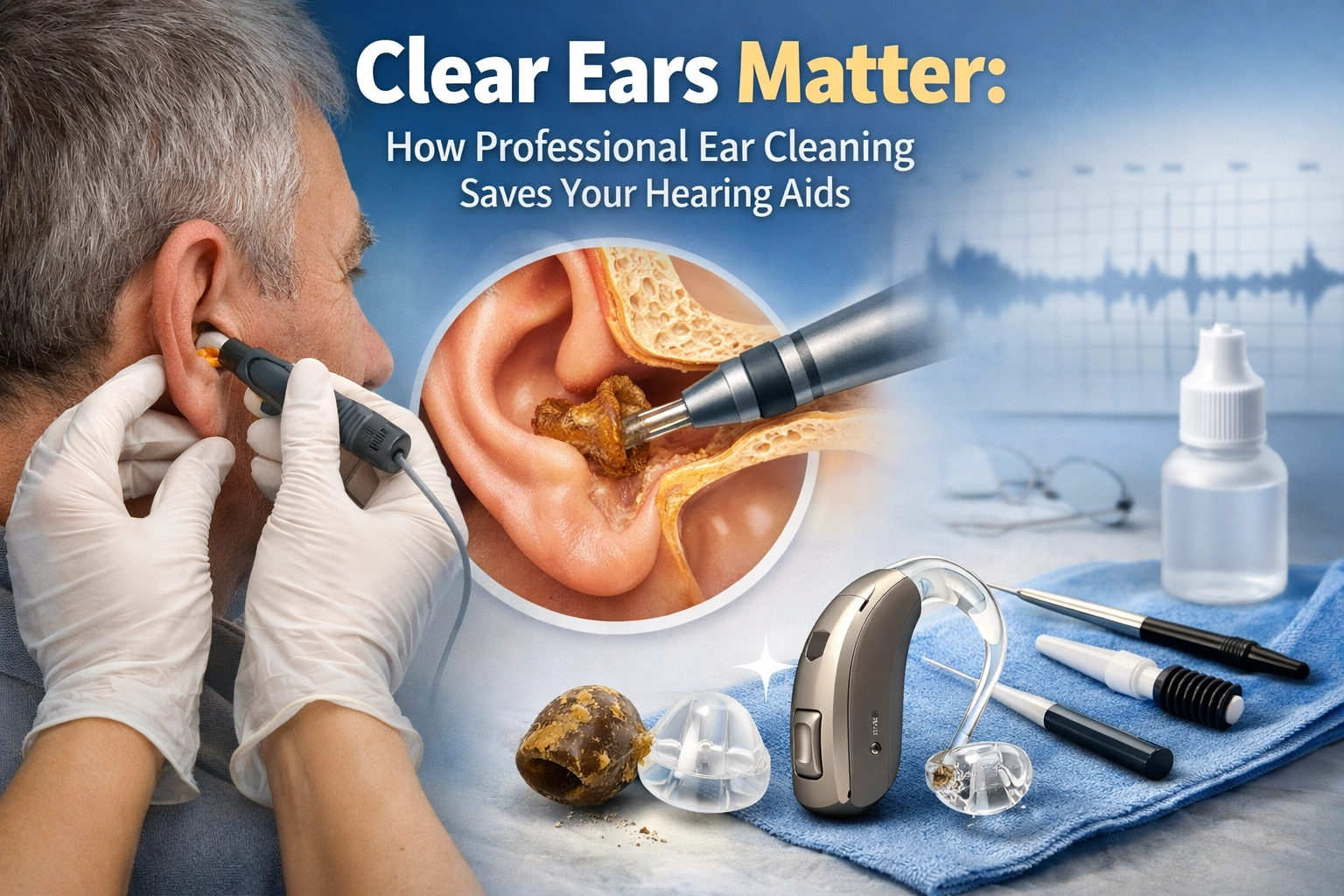
You see, your ears are designed to be self-cleaning. There’s a natural "conveyor belt" motion where skin cells and wax slowly migrate from the eardrum to the outer ear. But when you pop a hearing aid in, you’re essentially putting a literal bung in the system.
Here is the reality:
- The Blockage: The hearing aid prevents wax from escaping naturally.
- The Push-Back: Every time you insert your device, you’re likely pushing existing wax deeper into the canal.
- The Stimulus: Having a foreign object in your ear canal can actually stimulate the glands to produce more wax as a defense mechanism.
It’s a bit of a "catch-22" situation. You need the aids to hear, but the aids create the wax that eventually blocks the sound.

Feedback, Whistling, and Muffled Sound (Oh My!)
I hear you ask, "How do I know if it’s wax or if my hearing aid is actually broken?"
If your device has started "whistling" (what we professionals call feedback), it’s usually because the sound coming out of the hearing aid is hitting a wall of wax and bouncing right back into the microphone. It’s like standing in a cave and hearing your own echo, only much higher pitched and much more annoying.
Then there’s the muffle. If you feel like you’ve gone from high-definition sound back to listening through a bale of wool, your wax has likely migrated onto the receiver of the hearing aid itself. Once that wax hardens inside the tiny ports of your device, you’re looking at a serious drop in performance.
The Hidden Danger: How Wax Kills Your Tech
Let’s talk money for a second. Hearing aids are a massive investment. We’re talking about sophisticated micro-electronics that sit in one of the harshest environments on the human body, dark, damp, and acidic.
Ear wax isn't just "dirt"; it’s a mixture of oily secretions, skin cells, and sweat. When this "gunk" gets into the delicate components of your hearing aid, it can cause:
- Corrosion: The moisture in wax can fry the internal circuitry.
- Component Failure: Wax can permanently clog the receivers and microphones.
- Acidic Damage: Over time, the chemical makeup of cerumen (ear wax) can degrade the plastic and silicone parts of your device.
If you don't keep your ears clear, you aren't just dealing with bad sound, you’re shortening the lifespan of your expensive equipment. Regular professional ear cleaning isn't just about your comfort; it’s an insurance policy for your hearing aids.
The "Pinky Finger" Trap: Why DIY is a No-Go
I know the temptation. Your ear feels itchy, or you can feel that bit of wax sitting right there. You grab a Q-tip, a bobby pin (yes, we’ve seen it!), or even try to hook it out with your pinky finger.
Stop right there.
When you use a cotton bud, you might see a tiny bit of yellow on the tip and think, "Job well done!" But in reality, you’ve likely just packed the other 90% of that wax tight against your eardrum. For a hearing aid user, this is a disaster. It makes the "whistling" worse and makes it even harder for a professional to remove the wax later because it’s been compacted like a brick.

Why Microsuction is the "Gold Standard"
You’ve probably searched for "ear wax removal near me" and seen various options. You might remember the old-school "syringing" with a big metal tub and a jet of water.
Back-up a minute: we don't do that here.
At Ear Suction Clinic, we use microsuction. It’s exactly what it sounds like: a tiny, medical-grade vacuum that gently lifts the wax out of the ear.
- It’s dry: No water means no risk of infection for those with perforated eardrums or sensitive canals.
- It’s precise: We work under a high-powered microscope, so we can see exactly what we’re doing. No guesswork involved.
- It’s fast: Most appointments take about 20 minutes. You could be in and out on your lunch break!
If you’re curious about the process, you can check out our FAQ page for a deeper dive into how it works.
Convenience at Your Door: Home Visits in Perth
We understand that for many of our long-term hearing aid users, getting into a clinic isn't always easy. Maybe the traffic in Perth is a nightmare, or maybe mobility is a bit of a struggle these days.
That’s why we offer home visits. We bring the ear cleaning clinic to you. You get the same professional-grade microsuction technology and the same expert care, all from the comfort of your own armchair. It’s about making ear health accessible to everyone, regardless of where they are.

Your 3-Step Plan for Healthy Ears and Happy Aids
So, how do you stay on top of it? I recommend a simple three-step approach:
- Daily Maintenance: Wipe down your hearing aids every single night with a dry, lint-free cloth. Use the small brush provided by your audiologist to clear the wax guards.
- The "Listen" Test: If you notice your hearing aid volume needs to be turned up higher than usual, or if the feedback is becoming a daily occurrence, don't wait. That’s your cue that a blockage is forming.
- Scheduled Maintenance: Don't wait for a total blockage. Most hearing aid users benefit from a professional clean every 3 to 6 months. It’s much easier (and cheaper!) to remove soft, fresh wax than it is to deal with a hard, impacted "plug" that’s been sitting there for a year.
Is it Time for a Check-up?
If you’ve noticed your hearing hasn't been quite right lately, or if your devices are spending more time whistling than working, it’s time to take action.
Ignoring ear wax buildup doesn't just muffle the world; it puts your hearing aids at risk of permanent damage. We want you to enjoy every sound: from the birds in the morning to the voices of your loved ones: without the frustration of a blocked ear.
Don't let a bit of wax stand between you and the world.
At Ear Suction Clinic, we’re here to help you hear clearly again. Whether you want to visit us or have us come to you, our team is ready to provide the professional care your ears deserve.

Ready to clear the air (and your ears)?
Book your appointment online today or give us a buzz to chat about our home visit options. Your hearing aids: and your ears: will thank you!
Keywords: professional ear cleaning, ear wax removal near me, ear cleaning clinic, microsuction Perth, hearing aid maintenance, blocked ears relief, ear wax removal home visit.