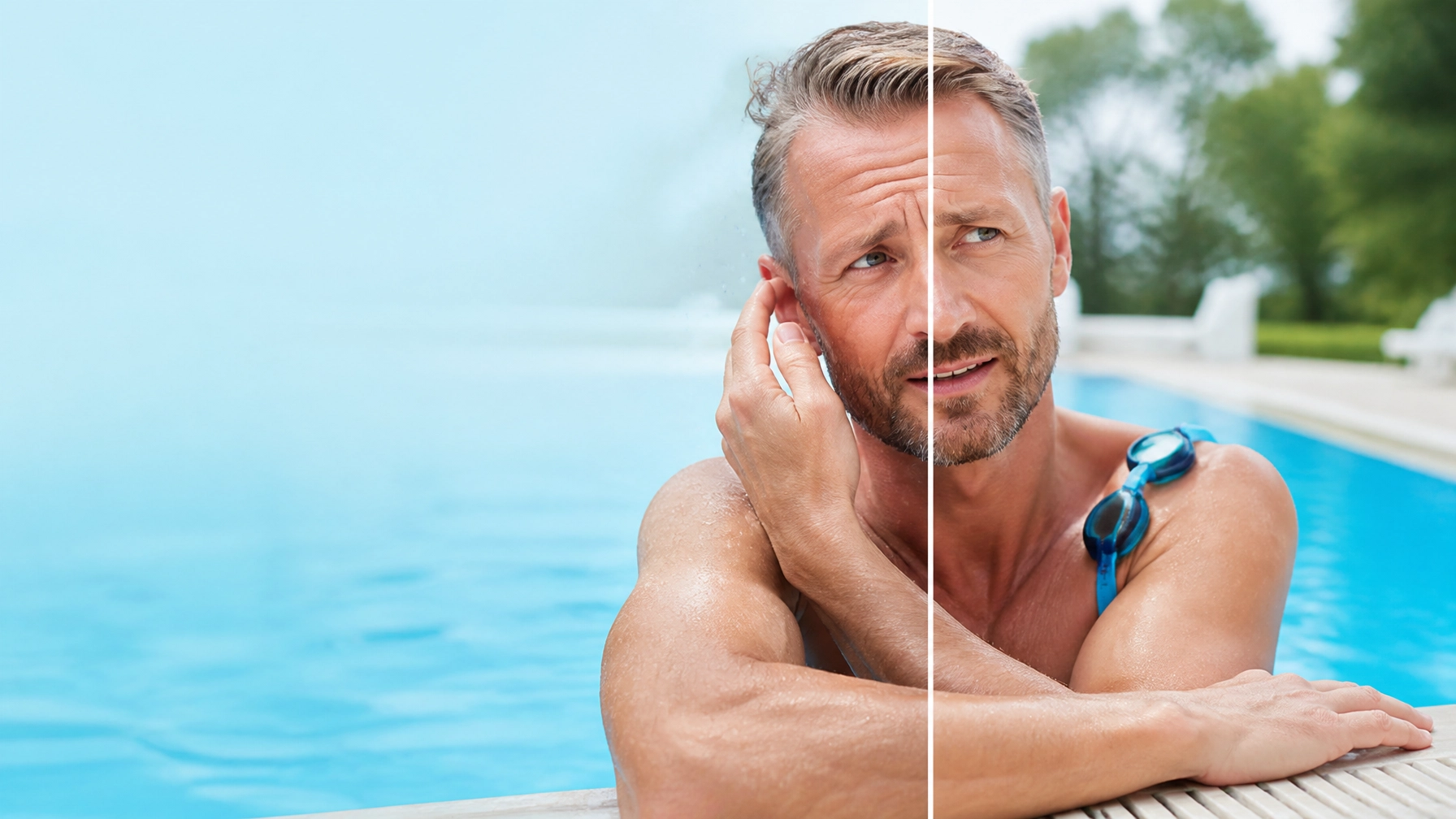
Is your ear blocked because of ear wax , or is a post-swim ache actually an infection?
And here’s the million-dollar question: should you reach for cotton buds, ear drops or a home ear-cleaning gadget?
Myth: Every blocked ear after swimming is just water or wax.
Reality: Swimmer’s ear and impacted ear wax can feel similar, but they need very different care.
With Perth’s warmer months and swim season approaching, I’m expecting more people to ask us about muffled hearing, itchy ears and that frustrating “underwater” feeling.
So, let’s back up a minute and look at the differences. I’ll also explain when you need a GP, when professional ear cleaning may help, and how microsuction ear wax removal can provide fast blocked ear relief.
Important: This article is general information, not a diagnosis. Ear pain, discharge or sudden hearing loss should be assessed by a qualified health professional.
What is swimmer’s ear?
Swimmer’s ear , medically known as otitis externa , is inflammation or infection of the outer ear canal.
It often develops when water remains trapped inside the ear after swimming or showering. In a warm, damp environment, bacteria can multiply. Scratching or cleaning the canal can also damage the delicate skin, making infection more likely.
According to Healthdirect Australia, symptoms can appear within about two days of water exposure.
Common symptoms include:
- Pain inside or around the outer ear
- Pain that becomes worse when you pull the ear or press the small flap at the ear opening
- Itching
- Redness or swelling
- A feeling of fullness
- Muffled hearing
- Clear, yellow or pus-like discharge
- Pain when chewing in some cases
The pain can range from mild irritation to quite severe. If touching the outside of your ear makes you wince, swimmer’s ear becomes more likely.
What is impacted ear wax?
Ear wax is normal. In fact, it protects and lubricates the ear canal.
The problem begins when wax builds up and becomes impacted. This can happen gradually, particularly if you use hearing aids, earbuds or earplugs , or if you regularly put things inside your ears.
Impacted wax commonly causes:
- A blocked or full feeling
- Muffled hearing
- Reduced hearing in one or both ears
- Mild earache or pressure
- Itching
- Tinnitus, such as ringing or buzzing
- Occasionally, dizziness or a cough
Unlike swimmer’s ear, impacted wax usually does not cause strong pain when you move or pull the outer ear. It also typically does not cause pus, fever or significant redness.

Swimmer’s ear vs ear wax: a quick comparison
| Symptom or clue | Swimmer’s ear | Impacted ear wax |
|---|---|---|
| Main issue | Infection or inflammation | Physical blockage |
| Common trigger | Swimming, showering or moisture | Gradual wax build-up |
| Pain | Often moderate to severe | Usually mild discomfort or pressure |
| Pain when touching the ear | Common | Less typical |
| Itching | Common | Possible, but often milder |
| Discharge | May be present | Not usually present |
| Hearing | Muffled due to swelling and debris | Muffled due to wax blockage |
| Fever | Possible in more serious infections | Not expected |
| Onset | Can appear quickly after water exposure | Often gradual |
Of course, ears don’t always read the textbook. You can have ear wax and swimmer’s ear at the same time. Impacted wax may trap water and debris, creating a perfect little kettle of fish for irritation and infection.
That’s why looking inside the ear is so important.
Why cotton buds can make both problems worse
I hear you ask: “But if I can see the wax, why can’t I just remove it?”
Because the ear canal is not a cupboard shelf. It is narrow, sensitive and easy to injure.
Cotton buds can:
- Push wax deeper towards the eardrum
- Scratch the ear canal
- Cause bleeding or inflammation
- Remove protective wax
- Trap moisture and bacteria
- Make swimmer’s ear more likely
The same warning applies to hairpins, keys, fingernails and home ear-cleaning tools.
If it goes inside your ear canal, it can cause more trouble than it solves.
The safest everyday approach is simple: wash the outside of your ears with a soft cloth and leave the canal alone.
What about ear drops?
Ear drops can be useful in some situations, but they are not a universal fix.
For suspected swimmer’s ear, treatment commonly involves prescription drops from a doctor. These may contain medication to treat infection and inflammation. Keeping the ear dry is also important while it heals.
For uncomplicated ear wax, wax-softening drops may help loosen the blockage. However, I recommend checking with a pharmacist, GP or ear-care professional first , particularly if you have pain or are unsure what is causing the symptoms.
Do not use ear drops or attempt irrigation if you may have a perforated eardrum, ear tubes, recent ear surgery, significant pain or discharge unless a health professional has advised you to do so.
And please avoid forceful DIY syringing. Water pressure in the wrong situation can injure the ear canal or eardrum.
When should I see a doctor urgently?
If your symptoms suggest infection, wax removal alone is not the answer.
Please arrange prompt medical assessment if you have:
- Significant or worsening ear pain
- Pus-like, bloody or smelly discharge
- Fever
- Swelling around the ear
- Redness spreading onto the face
- Facial weakness or drooping
- Severe dizziness or balance problems
- Sudden hearing loss
- Symptoms that are not improving
People with diabetes or a weakened immune system should be particularly cautious about ear infections.
Healthdirect advises seeking medical attention for ear pain, itching, discharge or difficulty hearing, and recommends urgent care when symptoms occur alongside fever, swelling, weakness or facial drooping. You can also use the Healthdirect Symptom Checker or call 1800 022 222 for health advice.
What should I do after swimming in Perth?
As swimming season gets into full swing, a few simple habits can reduce irritation:
- Tilt your head from side to side after swimming to help water drain
- Gently dry the outside of your ears with a towel
- Avoid inserting cotton buds or fingers
- Take breaks from earbuds and hearing aids where practical
- Consider well-fitted swimming earplugs if you are prone to infections
- Avoid swimming in dirty or contaminated water
- Ask a pharmacist or doctor before using preventive ear drops
- Arrange an assessment if fullness or muffled hearing persists
If your ear feels full but is not painful, and there is no discharge, impacted wax may be the culprit. If symptoms are painful or worsening after swimming, swimmer’s ear needs to be considered first.
How microsuction can help with impacted ear wax
At Ear Suction Clinic, we use a careful, visual approach to professional ear cleaning.
Our typical process includes:
- Reviewing your ear health and medical history
- Examining the ear canal
- Softening wax where appropriate
- Removing wax with microsuction technology
- Using micro-forceps or another suitable technique if required
- Providing an individualised ear-care plan
Microsuction uses gentle suction to remove wax and debris without flushing water into the ear. That can be particularly helpful for people who find syringing uncomfortable or who need a more controlled approach.
Most appointments take around 20 minutes, and many patients notice relief straight away.

However, I want to be clear: microsuction is not a substitute for medical treatment for an active ear infection.
If your ear is very painful, swollen or producing discharge, we may recommend that you see your GP or another appropriate medical service first. Once an infection has been assessed and treated, professional cleaning may sometimes be appropriate to remove obstructing wax or debris.
Need blocked ear relief in Perth?
If you’re searching for ear suction Perth, professional ear cleaning or urgent ear wax removal, we offer same-day and urgent appointments when available. You do not need a GP referral to book.
We also provide home visit ear wax removal across Perth for people who cannot easily travel, including older adults and nursing home residents.
You can book an appointment online or call us on 1300 380 060.

The bottom line
A blocked ear after swimming might be wax, swimmer’s ear or both.
Wax is usually linked with fullness and muffled hearing. Swimmer’s ear is more likely to cause pain, itch, tenderness, redness or discharge.
The biggest risk is trying to guess : then pushing cotton buds, drops or water further into an already irritated ear.
If you have pain or discharge, seek medical advice promptly. If it feels like a straightforward wax blockage, professional microsuction ear wax removal can be a safe, gentle way to get clearer hearing and fast relief.
Enjoy Perth’s swim season : just look after your ears while you’re at it. 🏊
Keywords
blocked ear relief, urgent ear wax removal, ear suction Perth, professional ear cleaning, ear wax removal Perth, microsuction ear wax removal, swimmer’s ear Perth, otitis externa, impacted ear wax, ear wax removal home visit, same-day ear wax removal, ear cleaning clinic Perth